Book Appointment
New Patient Guide to Chiropractic Care in Bend, Oregon
A first visit to our chiropractic clinic in Bend, Oregon includes a health history review, a full spinal and physical examination, a personalized treatment plan and typically your first treatment in one appointment. Our Bend chiropractors combine chiropractic adjustments, laser therapy, shockwave therapy, spinal decompression and massage therapy based on each patient‘s condition and specific needs.
Why People in Bend Start Chiropractic Care in Spring
Spring in Bend marks a return to movement. Trails reopen. Bikes come out. The Deschutes fills with paddlers. And after a winter of sitting, shoveling and being less active, a lot of people finally decide to address the pain they’ve been putting off.
Our Bend chiropractors see this pattern every year. New patients walk in carrying months of accumulated tension, old nagging injuries and stiffness that only becomes obvious once they try to get active again. Common goals include training for Pole Pedal Paddle, keeping up on Phil’s Trail, getting through a full workday without back pain or simply moving through summer without limitations.
Chiropractic care addresses the root cause of musculoskeletal pain, not just the symptoms. When your spine and joints move properly, your whole body functions better, which matters a lot when Bend’s outdoor season runs from April through October.
What Conditions Do Bend Chiropractors Treat?
Our chiropractors in Bend treat a wide range of conditions, including:
- Lower back pain and disc injuries
- Neck pain and cervicogenic headaches
- Sciatica and radiating nerve pain
- Shoulder, hip and knee pain
- Plantar fasciitis and Achilles tendinopathy
- Sports injuries and overuse injuries
- Chronic pain that has not responded to other treatments
FAQ: Do I need a referral to see a chiropractor in Bend, Oregon? No. You can schedule directly with our Bend chiropractors without a physician referral. Total Body Chiropractic contracts with most major insurance providers for both chiropractic care and massage therapy.
What to Expect on Your First Chiropractic Visit in Bend

Step 1: Health History and Intake Forms
Before a thorough examination begins, you’ll complete intake paperwork covering your current complaints, past injuries, surgeries, medications and medical history. Completing these ahead of time saves time at your appointment. Ask about digital forms when you book.
Step 2: One-on-One Consultation
Your chiropractor listens first. You’ll describe your symptoms in your own words: when the pain started, what makes it worse, what you’ve already tried and what your goals look like. This conversation shapes every decision that follows.
Step 3: Full Physical and Spinal Examination
Your exam goes well beyond locating where it hurts. Our Bend chiropractors evaluate:
- Posture and spinal alignment
- Range of motion in the spine and affected joints
- Muscle strength and neurological function
- Movement patterns and functional mechanics
- Areas of joint restriction or misalignment
For athletes and active patients, functional movement screening helps identify how the body performs under load and where injury risk concentrates.
Step 4: Review of Findings and Treatment Plan
Your chiropractor explains what the physical exam revealed in plain language and walks you through a recommended care plan. This plan outlines which therapies will help most, how often you should come in and what realistic progress looks like for your specific condition. You have full opportunity to ask questions before any treatment begins.
Step 5: First Treatment
Most new patients receive their first treatment during this same visit. This commonly includes a spinal adjustment, soft tissue work or a combination of therapies based on your exam findings. Some patients notice pain relief immediately. Others feel progressive improvement over the following days.
Step 6: Home Care Guidance
Before you leave, your chiropractor provides specific recommendations for between visits: targeted stretches, movement modifications, posture adjustments or activity guidance. Following this home care accelerates your progress significantly.
Questions to Ask at Your First Chiropractic Appointment
These questions help you get the most from your first appointment:
- What did you find in my exam, and what does it mean for my treatment?
- How many visits do you recommend, and over what timeframe?
- Which therapies do you recommend for my condition and why?
- What can I do at home to support my recovery?
- What activities should I avoid or modify right now?
- How will we measure my progress?
- Do you accept my insurance?
FAQ: What should I wear to a chiropractic appointment? Wear comfortable, loose-fitting clothing. Athletic wear or yoga pants work well. Avoid belts, stiff jeans or anything that limits movement. Shoes come off for most exams and treatments.
Services at Total Body Chiropractic in Bend, Oregon
Our Bend chiropractors use multiple treatment options, often in combination, to treat the full picture of a patient‘s condition and achieve optimal health. Here’s how each one works and when it fits.
Chiropractic Care (Spinal Manipulation)
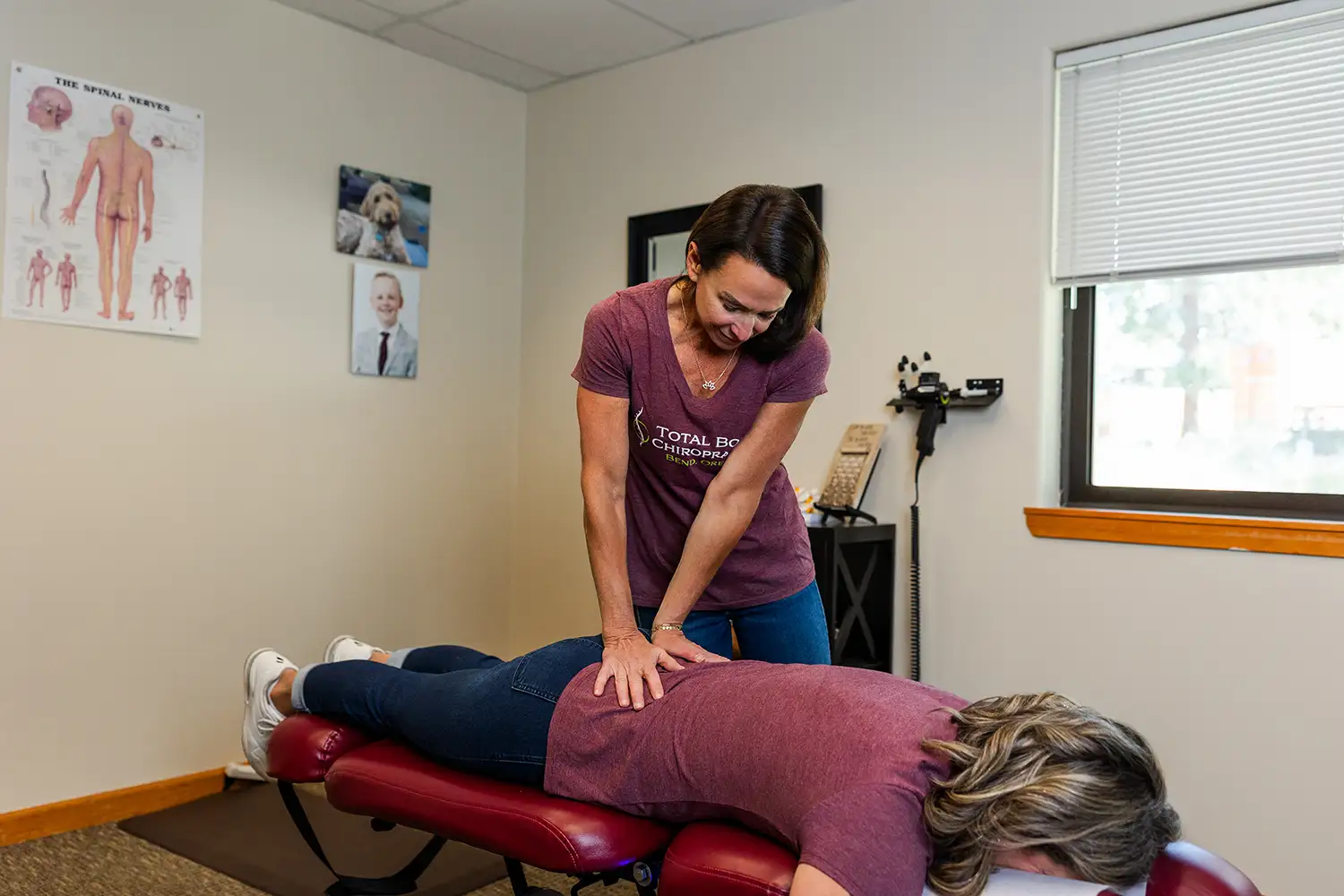
- What it does: Spinal manipulation restores proper movement to joints that have become restricted or misaligned. A precise, controlled force applied to a specific spinal segment reduces pain, improves mobility and supports normal nervous system function.
- Best for: Back pain, neck pain, headaches, sciatica, joint stiffness, disc-related pain and sports injuries.
FAQ: Does a chiropractic adjustment hurt? Most patients feel pressure during their first chiropractic adjustment and relief shortly after. The popping sound sometimes heard during a manipulation comes from gas releasing in the joint. Mild soreness similar to post-workout muscle fatigue sometimes follows a first adjustment and typically resolves within a day.

Laser Therapy
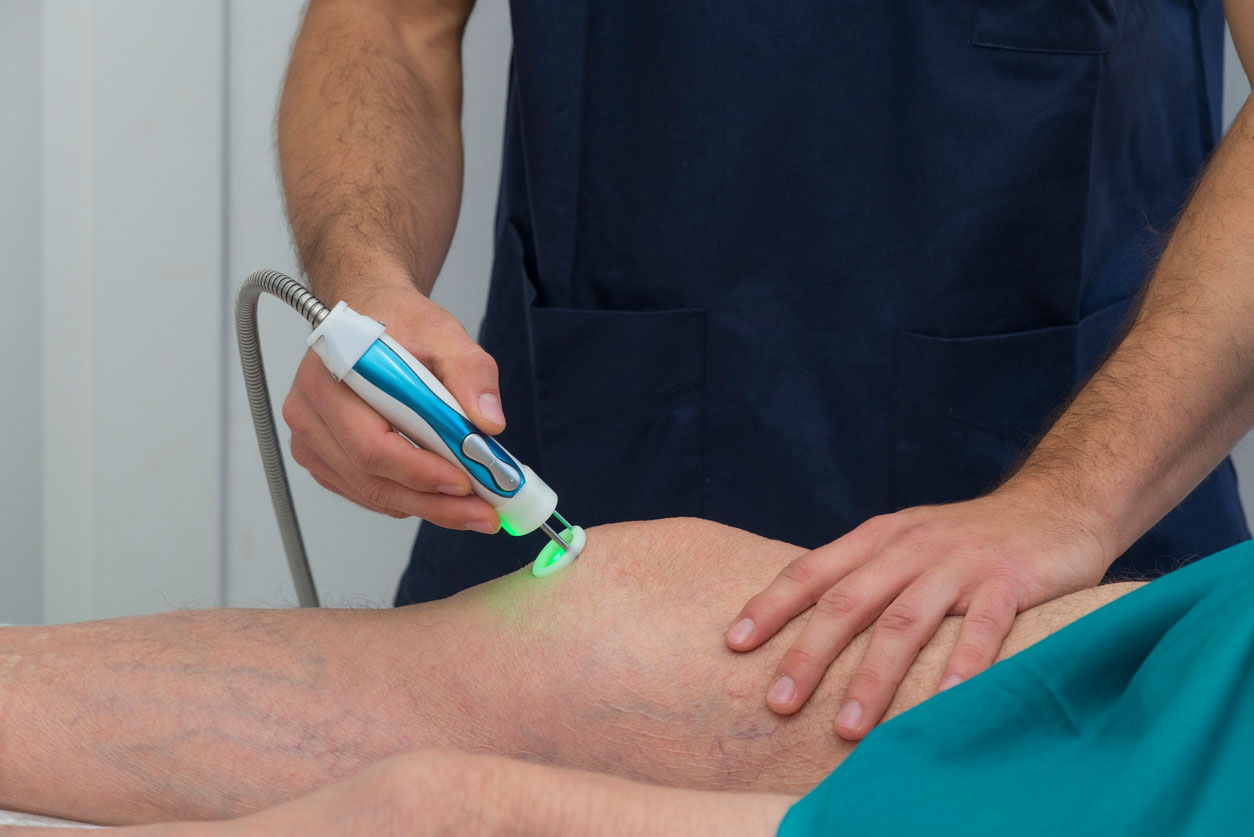
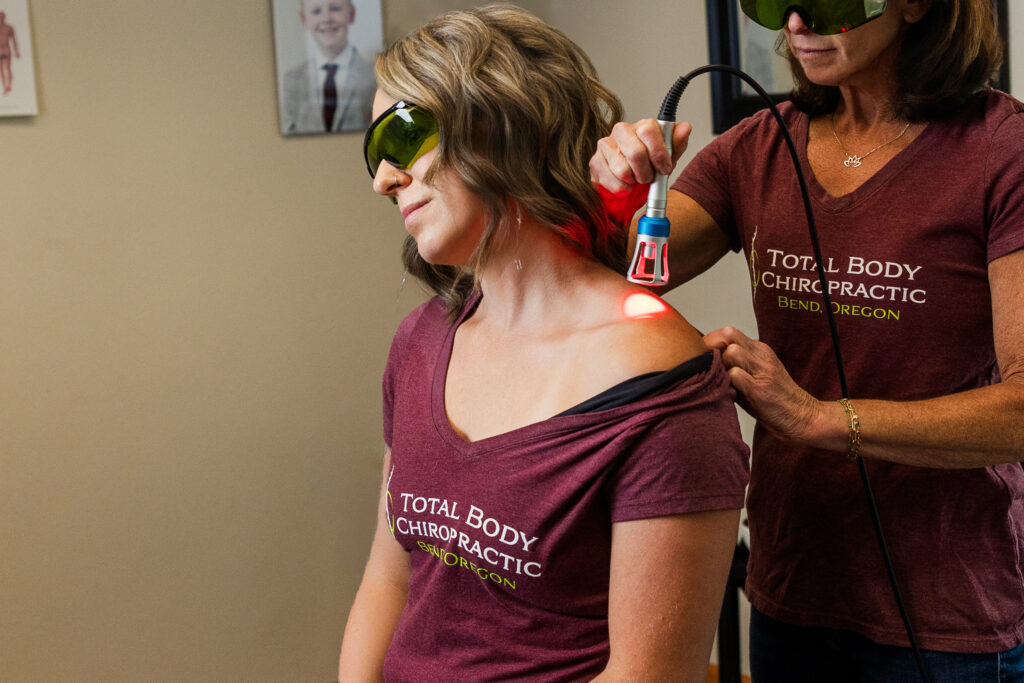
- What it does: Laser therapy delivers specific wavelengths of light into injured tissue, accelerating cellular repair, reducing inflammation and increasing circulation. Sessions involve no discomfort and require no recovery time.
- Best for: Disc injuries, nerve irritation, joint inflammation, soft tissue injuries and post-adjustment healing support.
- Used with: Spinal adjustments for disc and nerve conditions; spinal decompression for disc herniations with surrounding inflammation.
For someone trying to get back on a mountain bike or hit the trails before summer ends, that faster healing timeline matters.
Shockwave Therapy (EPAT)
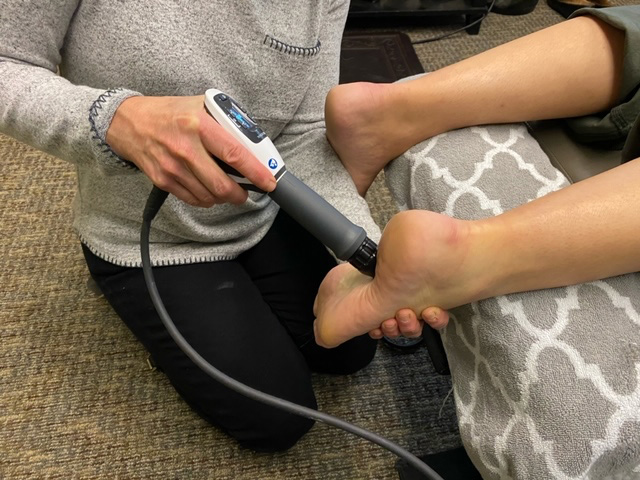
- What it does: Extracorporeal Pulse Activation Technology uses acoustic pressure waves to penetrate deep soft tissue. It breaks down scar tissue and calcifications, stimulates new blood vessel growth and triggers the body’s healing response in areas of chronic injury.
- Best for: Plantar fasciitis, Achilles tendinopathy, calcific shoulder tendinitis, patellar tendinopathy and chronic soft tissue pain that has not responded to other treatments.
- Used with: Chiropractic adjustments and laser therapy for complex or stubborn chronic conditions.
FAQ: How many shockwave therapy sessions does it take to see results? Most patients complete three to five sessions spaced one week apart. Many notice meaningful improvement by the second or third session. Results continue to develop over the weeks following treatment as the body’s healing response matures.
Shockwave therapy offers Bend runners, hikers, and cyclists a path through chronic heel or tendon pain without surgery or prolonged rest.
Spinal Decompression Therapy
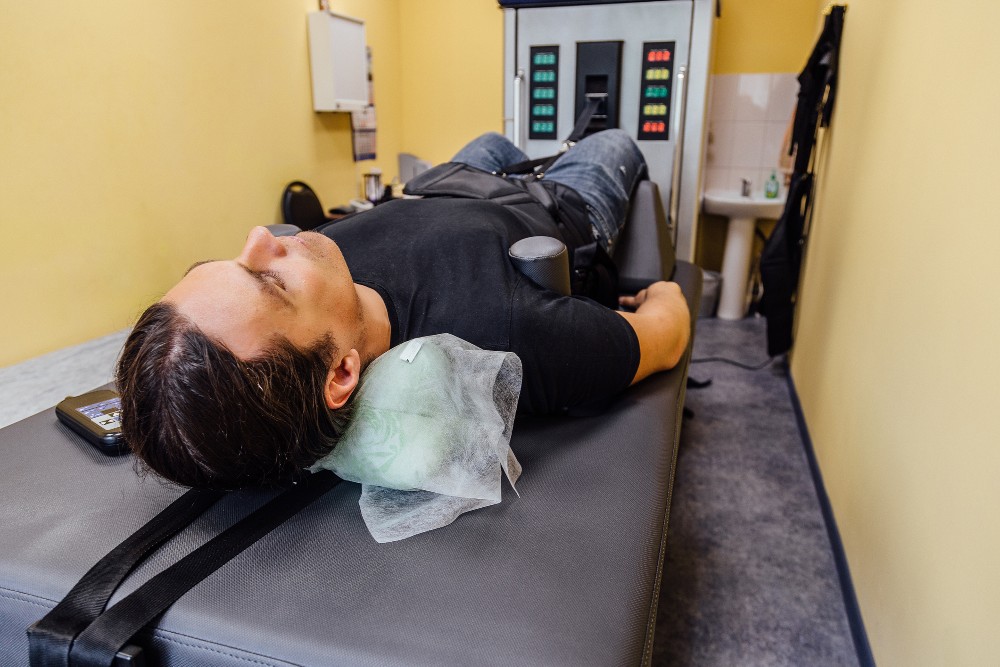
- What it does: A motorized traction table gently stretches the spine in precise increments, creating negative pressure inside the disc. This draws herniated or bulging disc material back toward center and pulls oxygen, nutrients and fluid into damaged disc tissue to support healing.
- Best for: Disc herniations, bulging discs, degenerative disc disease, sciatica and radiating nerve pain into the arms or legs.
- Used with: Laser therapy to address disc inflammation alongside the mechanical treatment; chiropractic adjustments to restore segmental mobility before or after decompression.
FAQ: What does spinal decompression therapy feel like? Most patients describe a gentle stretching sensation and find sessions relaxing. Treatment tables control the traction precisely based on each patient‘s weight, condition, and tolerance. There’s no pain involved in a properly calibrated session.
For patients who’ve been told surgery may be their only option for disc pain, spinal decompression therapy frequently provides significant relief without any invasive procedure.
Massage Therapy
- What it does: Our licensed massage therapists offer deep tissue massage, sports massage, myofascial release, trigger point therapy, Swedish massage, Ashiatsu, cupping, Gua-sha and energy medicine massage. Each modality targets soft tissue differently based on the patient‘s needs.
- Best for: Muscle tension, fascial adhesions, trigger points, athletic recovery, stress-related pain and soft tissue support alongside chiropractic care.
- Used with: Almost every treatment plan. Relaxed, lengthened soft tissue makes chiropractic adjustments more effective and helps the body hold corrections between visits.
FAQ: Does massage therapy help with back pain? Yes. Massage therapy addresses the muscular and fascial layer of back pain that spinal adjustments alone don’t fully resolve. When our Bend chiropractors combine chiropractic care with targeted soft tissue therapy, patients typically progress faster and maintain results longer.

How Our Bend Chiropractors Combine Therapies
Real treatment rarely involves a single approach. Here’s how multiple therapies work together for a common Bend patient scenario:
Patient: Trail runner with sciatica and hip tightness after a long run on the Deschutes River Trail.
Treatment combination:
- Spinal adjustment to restore lumbar and sacroiliac joint mobility and reduce nerve irritation
- Spinal decompression to address a contributing disc bulge creating sciatic nerve pressure
- Laser therapy to reduce inflammation around the disc and nerve root
- Sports massage to release hip flexor and glute tension placing excess load on the lumbar spine
Each therapy addresses a different layer of the same problem. Together, they move recovery forward faster and more completely than any single treatment would.
Frequently Asked Questions: First-Time Chiropractic Visits in Bend
- How long does a first chiropractic visit take? Plan for 45 to 60 minutes for a new patient appointment at Total Body Chiropractic in Bend. This allows time for the full consultation, examination, findings review and first treatment.
- How soon will I feel better after starting chiropractic treatment? Many patients notice improvement after their initial visit. Acute problems tend to respond quickly. Chronic conditions that have developed over months or years typically require more visits to resolve fully. Your chiropractor will set realistic expectations based on your specific findings.
- Do I need to keep coming to the chiropractor forever? No. Our Bend chiropractors design treatment plans with a clear endpoint. The goal moves through three phases: relief care to reduce pain, corrective care to address the underlying cause and optional wellness care to maintain function and prevent recurrence. Many patients choose periodic wellness visits after completing their initial plan, but ongoing care is never required.
- Does Total Body Chiropractic in Bend accept insurance? Yes. Total Body Chiropractic contracts with most major insurance providers for chiropractic care and massage therapy. Contact the front desk before your appointment to verify your specific coverage.
Ready to Book Your First Visit?
Spring is the right time to stop managing pain and start addressing it. Whether you’ve dealt with something for years or a new ache surfaced after a slow winter, our chiropractors in Bend at Total Body Chiropractic want to help you move into summer feeling better than you did coming out of it.
Book your appointment online or call us directly. We’d love to help you get moving again.