 Book Appointment

What Is the Graston Technique and What Does It Help?
Some injuries do not heal in a straight line. A tight IT band, a cranky Achilles, or an old strain that left behind scar tissue can keep flaring up long after you expected it to settle down. When the problem lives in the soft tissue, the right tool can make a real difference.
The Graston Technique is a hands-on therapy that uses specialized stainless steel instruments to find and treat soft tissue restrictions, break down scar tissue and adhesions, and get stalled healing moving again. It is drug-free, non-surgical, and often used when stretching, rest, and other approaches have not fully resolved a stubborn problem.
For active people in Bend, whether you are logging miles on the trails, riding, or skiing, soft tissue injuries come with the territory. At Total Body Chiropractic & Massage in Bend, Oregon, we were one of the first clinics in the area to offer the Graston Technique, and we use it as part of an integrated approach to soft tissue pain and recovery. Here is what it is and what it helps.
Quick Answer: What Is the Graston Technique and What Does It Help?
The short version:
- The Graston Technique is a form of instrument-assisted soft tissue mobilization (IASTM) that uses precision stainless steel tools to detect and treat restrictions, scar tissue, and adhesions in muscles and connective tissue.
- It helps a range of soft tissue and overuse conditions, including plantar fasciitis, Achilles tendonitis, tennis and golfer’s elbow, IT band syndrome, chronic neck and back tightness, and post-surgical scar tissue.
It works by breaking down adhesions, boosting blood flow to the area, and stimulating the body’s natural healing response. It is drug-free and non-surgical, and it is often combined with other care for better, longer-lasting results.

What Is the Graston Technique?
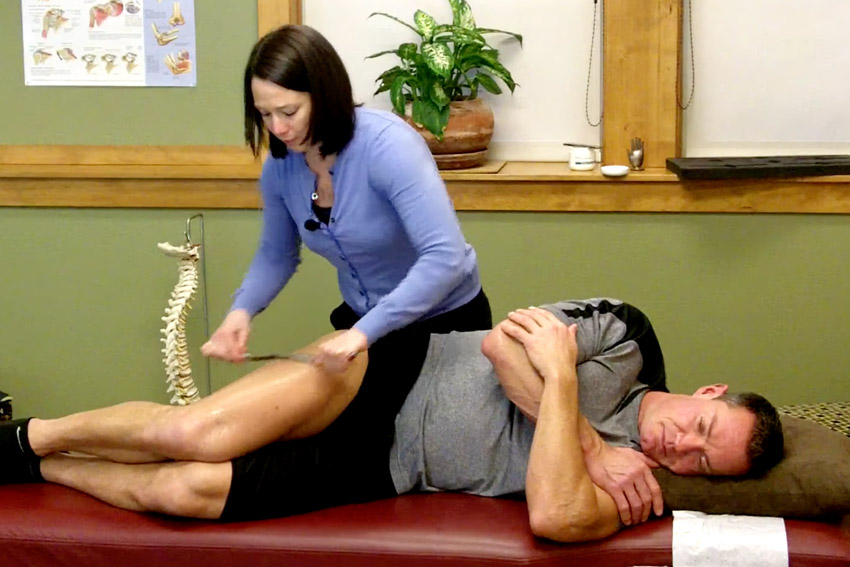
The Graston Technique is a form of instrument-assisted soft tissue mobilization, or IASTM. Instead of relying on the hands alone, a trained provider uses specialized stainless steel instruments to scan the soft tissue, locate areas of restriction, and treat them with precision.
The instruments let the provider feel and address problem areas that can be hard to reach with the hands, delivering focused treatment to the muscles, tendons, and connective tissue where restrictions and scar tissue build up. Total Body Chiropractic & Massage was one of the first chiropractic clinics in Bend to offer this therapy.
How the Graston Technique Works
The technique addresses the underlying tissue damage that keeps an injury from healing. It works by:
- Breaking down scar tissue and adhesions that limit movement
- Increasing blood flow to the injured area
- Stimulating the body’s natural healing response
- Improving tissue mobility and flexibility
By restarting the healing process in tissue that has become stuck, the Graston Technique helps the body resolve injuries that have plateaued rather than simply managing the symptoms.
What to Expect During a Session
A Graston session begins with a focused evaluation, where your provider uses the instruments to scan the tissue and identify the areas that need work. From there, treatment is targeted directly at those restrictions.
Sessions are brief. Some patients feel mild discomfort during treatment, followed by temporary soreness afterward, similar to the fatigue you might feel after a hard workout. Your provider may also recommend stretches or exercises to do after treatment to support your progress.
What Does the Graston Technique Help?
The Graston Technique is designed for soft tissue and overuse conditions, especially ones involving scar tissue, adhesions, or chronic tightness that has not resolved with other care.
Conditions the Graston Technique May Help
The Graston Technique may be beneficial for:
- Plantar fasciitis and heel pain
- Achilles tendonitis
- Tennis elbow and golfer’s elbow
- IT band syndrome
- Carpal tunnel syndrome
- Rotator cuff injuries and shoulder problems
- Chronic neck and back muscle tightness
- Post-surgical scar tissue and adhesions
It is most useful for soft tissue problems that have become chronic or that involve scar tissue and restricted movement, rather than acute injuries still in the early stages of healing.
What the Research Suggests
Research on instrument-assisted soft tissue mobilization is encouraging, particularly for pain and mobility. A 2025 systematic review and meta-analysis of 20 randomized trials found that IASTM significantly reduced pain and improved range of motion in people with musculoskeletal disorders, with the strongest results for lower-limb and spinal conditions. The same review noted that results were most stable when IASTM was combined with conventional rehabilitation, and that its effect on overall function was more modest and variable. In other words, it tends to work best as one part of a broader treatment plan rather than a standalone cure.
Graston Technique vs. Traditional Massage
People often ask how the Graston Technique differs from a regular massage. Both work on soft tissue, but the tools and the goal are different.
| Graston Technique | Traditional Massage | |
|---|---|---|
| Main tool | Stainless steel instruments | The therapist's hands |
| Main focus | Scar tissue, adhesions, and restrictions | General muscle tension and relaxation |
| How it works | Detects and breaks down tissue restrictions | Kneads and relaxes muscle tissue |
| Best for | Overuse injuries, scar tissue, chronic tightness | Tension, relaxation, circulation, recovery |
| Session feel | Brief, targeted, sometimes mild discomfort | Broader, often more relaxing |
The two are complementary rather than competing. The Graston Technique targets specific restrictions with precision, while massage therapy addresses broader muscle tension, and many patients benefit from both.
Is the Graston Technique Right for You in Bend?
The right approach depends on the kind of problem you are dealing with.
The Graston Technique may be a good fit if:
- You have a soft tissue or overuse injury that has not fully healed
- You are dealing with scar tissue or adhesions from an old injury or surgery
- You have chronic muscle tightness or restricted movement
- You want a non-surgical, drug-free option to help stalled healing along
Another approach may fit better if:
- Your pain is primarily joint or disc related rather than soft tissue related
- Your injury is acute and still in the early stages of healing
- Your symptoms point to a problem that needs different or more urgent care
When you come in for an evaluation at Total Body Chiropractic in Bend, your provider will assess your history and the source of your pain to determine whether the Graston Technique is a sensible fit, or whether another approach would serve you better.
How the Graston Technique Fits Into Your Care
At Total Body Chiropractic & Massage, the Graston Technique is rarely used on its own. Because soft tissue restrictions, joint function, and muscle tension all influence one another, combining approaches tends to produce better results than any single technique.
At our Bend chiropractic and massage clinic, the Graston Technique is often paired with chiropractic adjustments to address alignment alongside soft tissue restrictions, and with massage therapy for broader muscle work. When an injury needs additional support, it may also be combined with laser therapy, shockwave therapy, or spinal decompression, depending on your condition.
Many patients at our Bend clinic find that this coordinated approach helps them recover faster and stay ahead of re-injury more effectively than treating any single part of the problem alone.
When Should You Seek Care for a Soft Tissue Injury in Bend, Oregon?
It may be time to come in if:
- A soft tissue or tendon injury is not improving after a couple of weeks of rest and self-care
- The same area keeps flaring up no matter how much you stretch or rest
- An old injury still limits your activity or never fully healed
- Scar tissue or tightness is restricting your movement
- Pain is affecting your training, work, sleep, or daily life
Soft tissue problems tend to respond better when addressed before they become deeply entrenched. Getting an evaluation at our Bend chiropractic office can clarify what is going on and what will help.
When Is a Soft Tissue Injury an Emergency?
Most soft tissue and overuse injuries are not medical emergencies, but some symptoms warrant prompt attention.
Seek immediate care if you experience:
- Sudden, severe pain after a fall, accident, or other trauma
- A pop or tear followed by significant swelling, bruising, or inability to bear weight
- Visible deformity in a limb or joint
- Loss of sensation, or significant weakness in an arm or leg
- Signs of infection, such as warmth, redness, and fever around the painful area
If you are unsure whether your symptoms need urgent attention, it is always safer to seek medical care or call and ask.
What to Expect From the Graston Technique at Total Body Chiropractic in Bend, Oregon
Your first visit begins with a conversation about your history, symptoms, and goals, along with a focused evaluation of the affected tissue so your provider understands what is driving your pain. This guides how the Graston Technique is applied and whether it should be combined with other care.
From there, most patients can expect:
- Brief, targeted treatment sessions
- Possible mild discomfort during treatment and temporary soreness afterward, similar to post-workout fatigue
- Post-treatment stretches or exercises to support your recovery
- A plan that often combines the Graston Technique with adjustments, massage, or other therapies
- Gradual improvement in mobility and pain as the tissue heals
How many sessions you need depends on the injury, how chronic it is, and how your body responds. Some patients improve quickly, while others benefit from a series of treatments over several weeks.
What Is the Graston Technique and What Does It Help?
Learn More About Soft Tissue Recovery at Total Body Chiropractic in Bend
 JUNE 12, 2021
3 Massages for Pressure Points in Your Feet
Whether you spend all day standing or complete hard workouts daily, your feet really take a beating.
Read Post NOVEMBER 19, 2024
Revolutionizing Herniated Disc Treatment with Shockwave Therapy
Living with a herniated disc can significantly impact your quality of life and normal activities. The pain...
Read Post DECEMBER 26, 2025
Sports Massage vs. Deep Tissue Massage: Which One Is Right for You?
Whether you’re hitting the trails, training for a race, or simply trying to stay active without pain, bodywork plays...
Read Post